BLOG

Technology is Us (2)

Here is the first British television advertisement in 1955

Until 1955 there was only one station. BBC. Then ITV was added – for those with enough money to own a television. Over the next ten years, with credit becoming easier (HP or ‘hire-purchase’) and companies springing up which rented out televisions. more and more people became hooked on the telly.

Things have changed somewhat. These days many people in the world’s rich countries have screens with access to thousands of television stations and millions of films.

Just as cinema and radio had, television changed the way we live and how we spent our time. One thing that has remained constant since 1955 are advertisements urging us to become good citizens of a consumer society.

In 1960 The Loneliness of the Long-Distance Runner by Alan Sillitoe was published, a few years later to become a gritty film starring Tom Courtenay. It’s centred on a young man in a Borstal (Young Offenders Institution). He narrates the story in the book, and gives a fascinating insight into the effect of advertising in the early days of commercial television.

To begin with, the adverts on the telly had shown us how much more there was in the world to buy than we’d ever dreamed of when we’d looked into shop windows but hadn’t seen all there was to see because we didn’t have the money to buy it with anyway. And the telly made all these things seem twenty times better than we’d ever thought they were. Even adverts at the cinema were cool and tame, because now we were seeing them in private at home. We used to cock our noses up at things in shops that didn’t move, but suddenly we saw their real value because they jumped and glittered around the screen and had some pasty faced tart going head over heels to get her nail-polished grabbers on to them or her lipstick lips over them, not like the crumby adverts you saw on posters or in newspapers as dead as doornails; these were flickering around loose, half-open packets and tins, making you think that all you had to do was finish opening them before they were yours, like seeing an unlocked safe through a shop window with the man gone away for a cup of tea without thinking to guard his lolly

The Loneliness of the Long-Distance Runner

The new advertisements on what were very poor black and white small screens seemed exciting because they ‘jumped and glittered around the screen’. Today, we may be drawn to the far more technically advanced flickerings and glitterings of not only advertisements. Those images and sounds we experience are designed to influence us strongly. The line from the first British television advertisement in 1955 to today’s smartphones, pads and home cinema is direct. Technology does not force us to behave in certain ways, or give decades of our lives to digital immersion, or to buy, or to gamble. But technological developments are a very big factor in how we choose, or think we choose, to live our lives.

Technology is Us (1)

One of the great scenes in cinema is from 2001: A Space Odyssey

We see an ape remove itself from the gang in a pre-human landscape.

Taking a large bone, it smashes it against rocks. It may be the world’s first hammer, the first tool.
Then the bone is thrown spinning skywards where, with a sharp film cut, it becomes a space station.

There is a long and rich history from pre-human tool use to the most advanced technologies of today.

And with each new major technology, our culture changes. The way we live changes.

Whether the pen is mightier than the sword or not, both started life as sticks. The first writing was done with a stick tracing shapes on the ground. The first weapons were sticks – clubs and spears. Writing and weaponry are major technologies that have changed the world. We take them for granted but they are all around us.

Th image on the left shows the BBC’s radio aerials from the 2LO transmitter in London’s Oxford Street in 1926. Early radio had one station (as did television until 1955 when ITV was added). Very few people were in range of the signals.

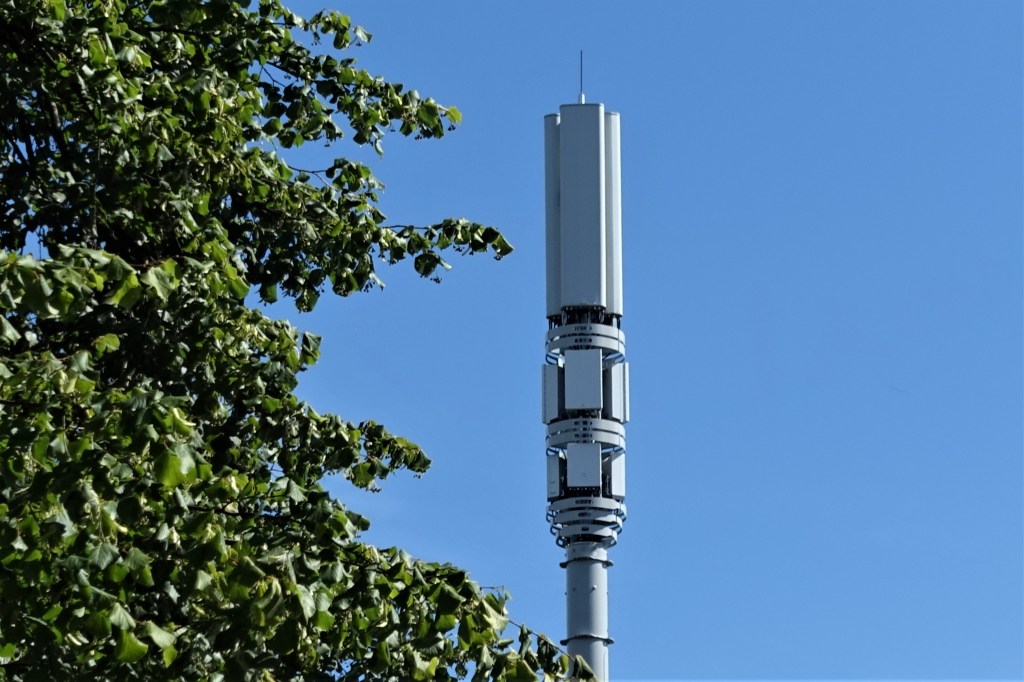
The image on the right is of a modern digital transmitter, one of thousands throughout Britain. It transmits thousands of radio and music stations, television stations and the massive worldwide web. The large majority of British people have access.

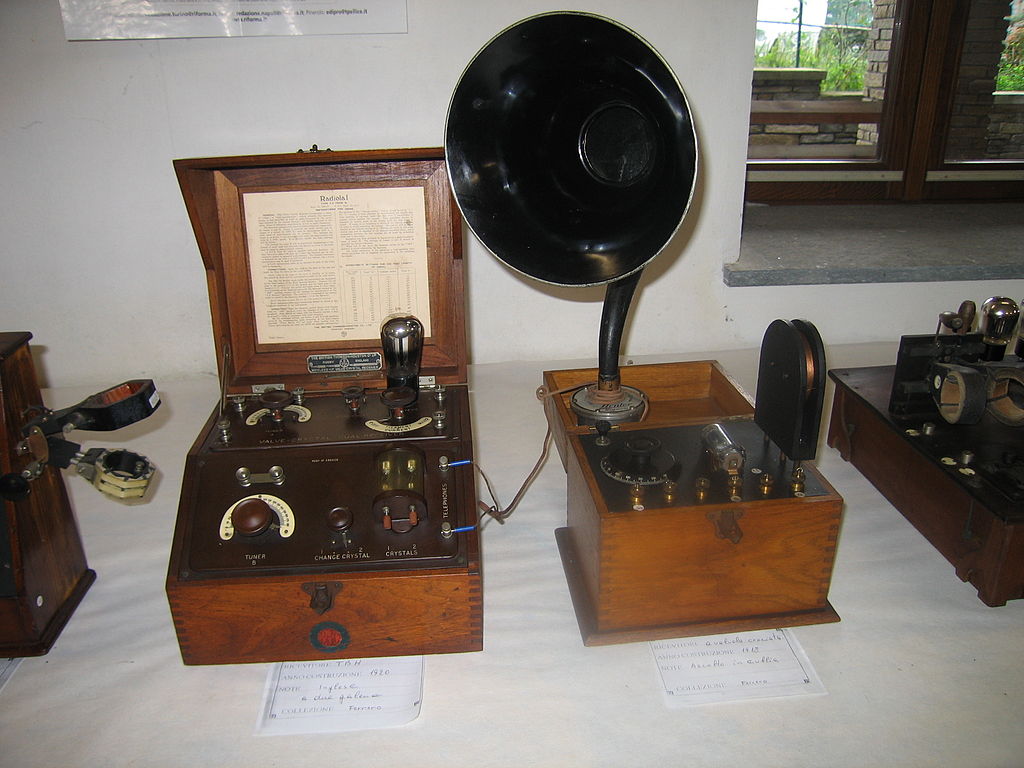
The image on the right shows a 192os radio. The one on the left is a pocket transistor radio that became popular in the late 1950s onwards, especially with young people. It was very usual to see young music lovers walking around with the radio pressed to their ear (though there was also a simple in-ear mono earphone that came with the device.

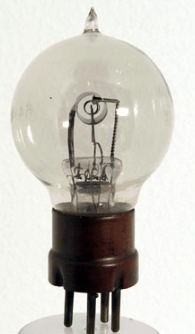
Early electronics was based around the thermionic vacuum valve. Valves consumed a great deal of electricity, wore out quickly and the glass broke easily too. In the 1940s along came the transistor (centre) to replace the valve, with a low energy consumption , much smaller and unbreakable reliability. The integrated circuit on the right, a ‘chip’ contains the equivalent of many thousands of transistors. Chips get smaller and more powerful by the year.

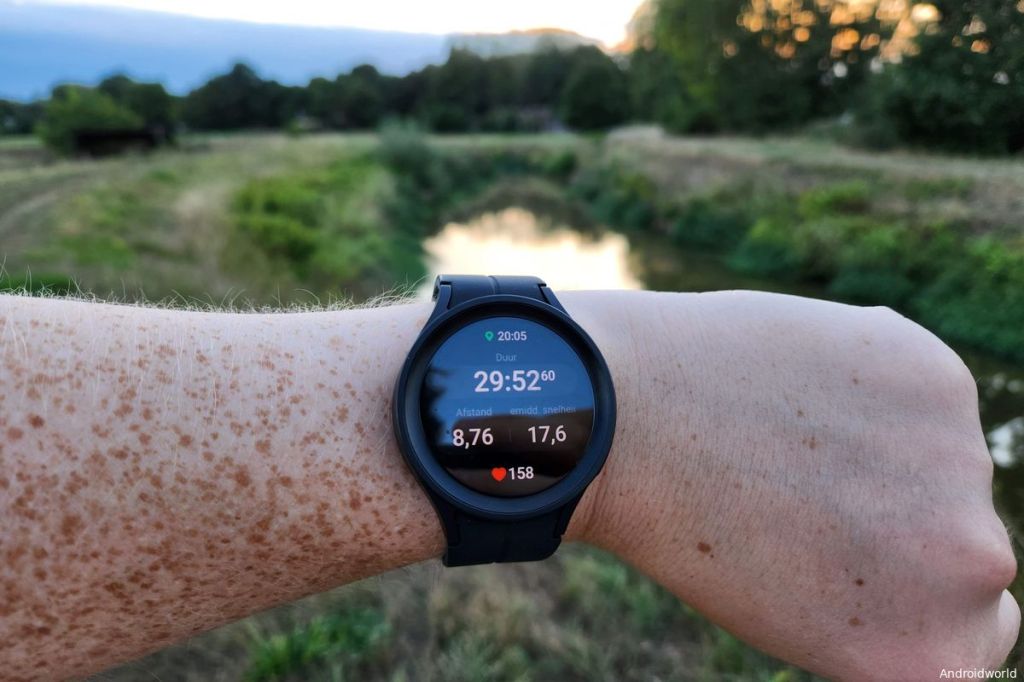
The first electronic digital computer is generally recognised as the ENIAC, 1943 (left). It contained 18.000 valves (see above, weighed 30 tons and cost,in today’s money $6 million. The smart watch on the right has immensely more computer power. A basic smart watch can be had for less than £10.

Early mobile phones were very heavy, had very limited range and were extremely expensive. Modern smartphones are relatively cheap for most people. With thousands of apps and access to thousands of businesses they are points of sale for everything from a pair of shoes to a casino bet. They have given rise to huge social media industries, 24/7 opportunities for watching films or listening to music, and also a range of supports for health and wellbeing.

Electronic media will become extensions of our nervous systems

Marshall McLuhan, 1962

/

When the ‘magic lantern’ first appeared, the earliest film projector, it was a fairground sideshow.

Nobody remotely understood that cinema would become a multi-trillion pounds industry that would impact on our ways of life.

While military and ship-to-shore radio was established in the first decades of the twentieth century, most people thought the idea of sitting by a box listening to voices and music was ridiculous.

Today, because of technological advances, whether we like it or not we are all inhabitants of a digital planet.

Just a concluding question: before we became extensions of digital machinery, before we gave so much of ourselves to digital connection what did we do? How did our grandparents or their ancestors live differently?
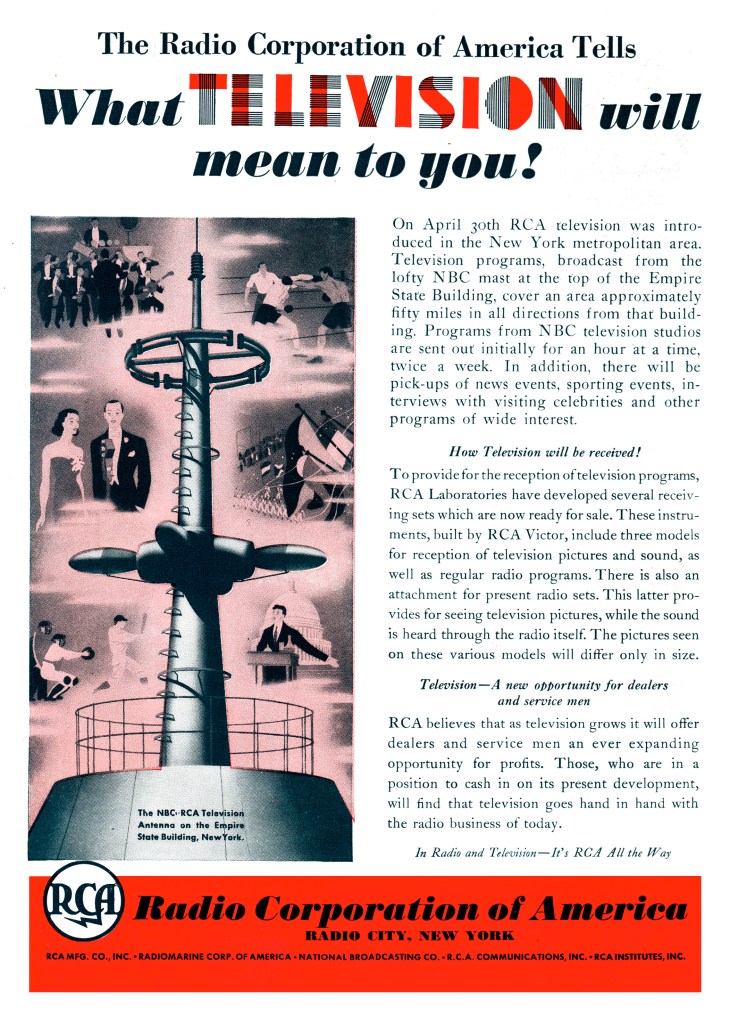
1939 advertisement about the coming of television to the USA

One Last Spin: full credits

On a personal note, I am extremely grateful to everyone who participated in the making of this film. It took over two years to make because of the pandemic and if it wasn’t for the patience and perseverance of those involved, this film would have never gotten made. I also want to thank the cast and crew for giving their time and talents to this, it was a joy to work with each of you! But the biggest acknowledgement and appreciation goes to the brave participants who provided their stories for this film, we all thank you

Ross Donald, Director

Credits

Directed by: Ross Donald

Produced by: Sophie Chater, Anna Frances & Claudia Docherty

Executive Producers: Martin Paterson & Adrian Bailey

Directors of Photography: Leon Brehony & Jamie Brown

Contributors: Martin Paterson, Kelly Field, John Myers: Tony Franklin, Gerda Reith, Ronnie Cowan & William Griffiths

Starring: Brian Robson, Deborah Anderson, Sean Tizzard, Joanna Littlefield & Dean Alexander

First Camera: Delilah Rose Niel, Fiann Macleod & Luca Michelli

Second Camera: Spike Wright & Matt Gibb

Sound: David McKeitch

Gaffer: Klaudia Bourbely, Niamh Gilhooly & Leonidas Eleftheriadis

Art Director: Jenna Callaghan

Wardrobe: Hannah Danson

Hair and Make Up: Steph Brewster, Brandon Allan, Charlie McGuire

Runner: Jamie Mackinlay

Editor: Ross Donald

Colourist: Beth Woodruff

Sound Design and Mix: David Mckeitch

Composer: Owen Devlin

Graphic Designer: Dalila D’Amico

Serviced By: Media Dog Camera Hire, Progressive Broadcast Hire & Hireacamera

Support From: Alliance, Scotland Reducing Gambling Harm, Gamban, GamLearn, EPIC Risk Management, NHS Scotland

Production Company: Reverie Films

In Association With: The Machine Zone

One Last Spin

An unflinching look at gambling addiction through the eyes of recovering addicts. One Last Spin explores the environments that condition people to gamble and the devastating effects it has on their lives and communities

If you’d like to see the film with a view to screening it in your own work, organisation or community please drop a line to info@gamblingwatchscotland.org.uk

Our New Logo

Gambling is one example of digital life. We think it’s an example of many big issues around our life online. Our devices are everywhere. Some of us spend many hours of our day, many years of our lives ‘hooked up’. Some would say just hooked, of course!

While we can all point to the benefits of digital technology there are voices which raise alarms about some aspects. We all witness, for instance, being in company where people are constantly scanning phone messages rather than interacting in a healthy sociable way. If we are ill we may be referred to online support: what, if anything, do we lose from missing out on face to face contact? Have digital media become extensions of our nervous systems – or have our nervous systems become extensions of ‘the digital machinery’?

More specifically, are we exploited by clever commercial enticements? Do we buy stuff we don’t need. Do we give in to repeated nudges to gamble? Are we gradually becoming impatient of time itself (so that most websites will only be visited for a few seconds unless something really grabs us)? Why do we jump from one thing to the other, never settle, always restless? Remembering that modern television is digital and utilises many methods of obtaining viewers, is there something in our digital lives that keeps us seeking constant distraction. If so, distraction from what? Boredom perhaps. Why would we be bored? Emptiness, anxiety, depression, boredom are all markets for someone to ‘sell’ us something.

Addiction itself has been called a disease of time, a dis-ease, and uneasiness with time. In the short-lived pleasure zone of the ‘fix’, time drops away, along with anxiety, restlessness. Then the way to recover from the inevitable horrible feelings and consequences that follow, the only ‘cure’ is another fix. Time spent not engaged with addictive behaviour is spent thinking about, longing for the fix. It’s a cycle, it’s like being strapped to a wheel from which there seems no escape.

But extreme clinical addiction is only part of it. It may be the case that for many of us, a permanent state of restlessness or anxiety, inability to settle peacefully into the time of the moment, provides the fertile ground for marketing, profit-making.

Just a thought or two. But thinking’s the last thing we are used to doing. Quick! Let’s check our social media accounts, spend the afternoon internet ‘window shopping’. It’s here that for some the temptation to gamble is strongest, and the advertisements promise that everybody is a winner.

Humans have always been led astray, made bad choices, given in to temptations, been led by feelings, followed the crowd and so on. The idea that a human being is some sort of rational machine is ludicrous. The question is whether digital commercial (and political) enterprises have amplified our tendencies to go against our better judgment.

The Machine Zone in 2022

The Machine Zone website will continue to run quietly and in the background while we put our efforts into distributing our film, One Last Spin.

There are only two of us working voluntarily and even if we were super-robots able to cast wide nets of algorithms we couldn’t begin to develop beyond a whisper.

While most of our focus has been on electronic gambling during the past five years which is an important issue in its own right, we see online gambling as something which is an example of wider concerns in our digital world.

These include thinking about the enormous impact that digital media have on our societies and our individual identities. The early theorist Marshall McLuhan wrote in the 1960s of electronic media becoming ‘extensions of our nervous systems’. To some extent we swim in a digital medium, unaware of it as fish are unaware of water.

At an everyday level our attachment to digital devices determines how we live our lives, how we spend our time. Would we rather be constantly checking our ‘feeds’ at the dinner table, for instance, or taking part in human conversation? Do we think of Alexa as a sort of friend? Are we enticed by microtargeted advertising to behaviours that are not good for us? Do commercial interests employ digital techniques to hit our basic human vulnerabilities?

Are we, as ordinary people, equipped to use the ‘goods’ of digital technology while avoiding the ‘bads’ – and is this even possible now? There are huge questions that we can only ask about what it means to live in the digital world of 2022. We’ll ask some of them in the coming twelve months. We think we have asked some already in our previous posts, though of course nobody has time to read anything these days! We tend to be highly anxious to jump from one bit (or byte) of stimulation or entertainment to the next.

Returning to gambling as an example of some of the questions that may be raised, we’ll end with a quotation from a book we reviewed, Vicious Games by anthropology professor Rebecca Cassidy:

            ‘An experiment which began in the 1980s ((financial deregulation, neoliberalism)), to shift the burden of risk from the state to the citizen, has increased inequalities and changed the ways in which we imagine wealth is created and shared. Gambling has been at the heart of these shifts: in the City as it deregulated and embraced riskier, increasingly complex and opaque ways to make money, becoming less and less accountable as a result, and in government itself, which encouraged citizens to become self-sufficient individualists.’

Film Night

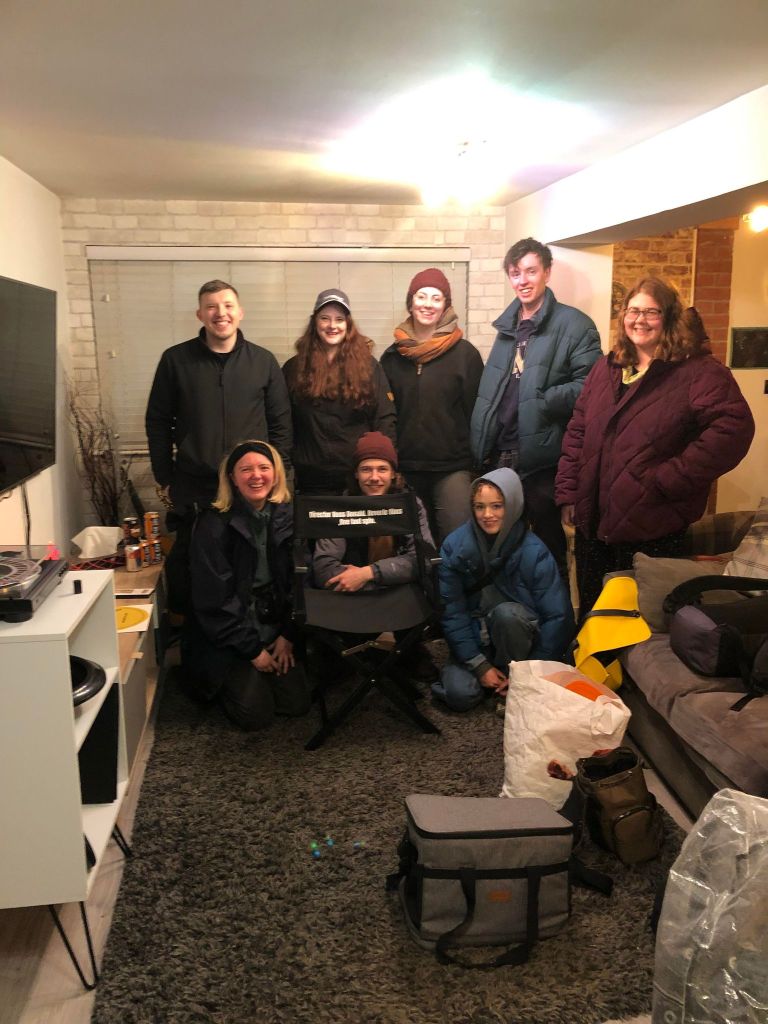
The last part of the film to be shot is Martin’s story. The crew gathered by night on 14 November, deep in the woods, powered by generators, to make what will be a very powerful scene.

All directed, of course, by Ross Donald. As an early Christmas present, Nartin bought him a chair!

By the way, on the chair is a vinyl LP complete with a ‘One Last Spin’ label. We hope to bring you news soon of a song being created to go along with our film.

The crew were fed and watered sufficiently to endure the harsh climate of Coatbridge. Just as well because they didn’t finish work until half an hour past midnight.

This drama sequence is indeed dark. It represents the part of Martin’s story when he considered taking his life.

From dark times people recover. Here’s a dazzling smile to testify to that. Martin with the actor who plays him, Brian Robson.

Zoomed Out: why human contact matters

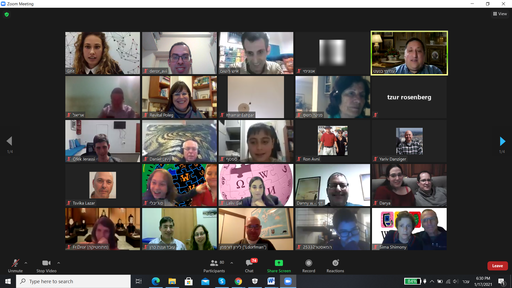
Many of us are not happy taking part in online meetings or online consulations with doctor or therapist. While accepting their necessity during the Covid lockdowns, and their usefulness in many cases, Zoom fatigue is yet another phrase to add to the dictionary of digital vocabulary.

In the longer term, we can agree that for some contexts such as business or other communications structured properly with a tight agenda, distance meetings have advantages: they save travel time, costs and are good for the environment. Formal meetings ideally would be strictly rational affairs, each participant following the long-established conventions of taking part. True, in many cases there are informal aspects of human involvement such as anger, irritation, sheer boredom. Sometime the ideal business structures of meetings fall apart as emotions take over.

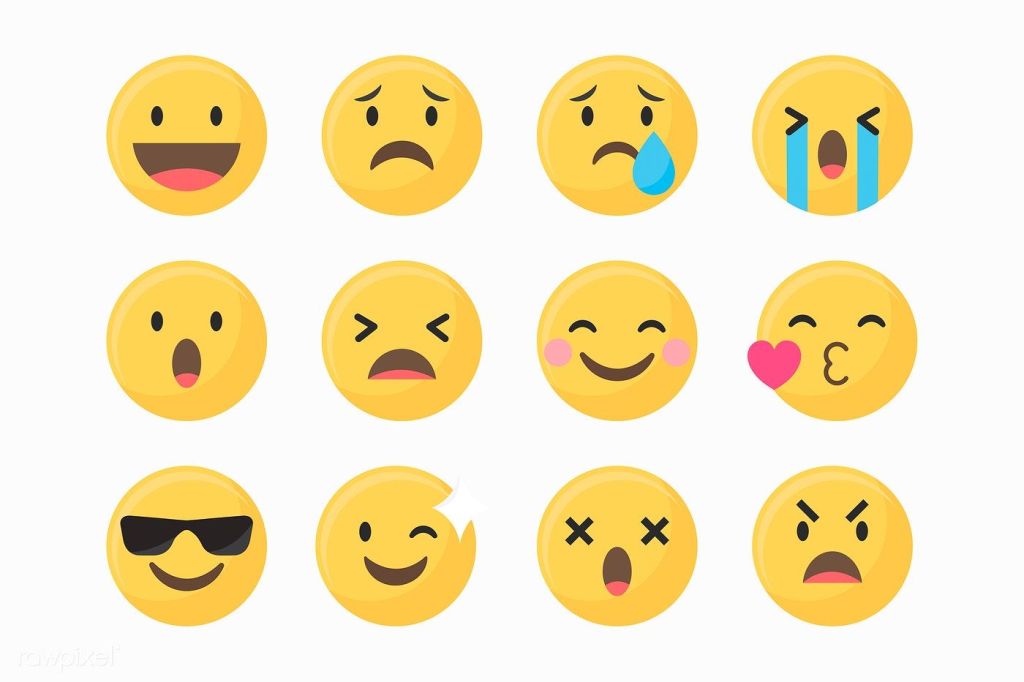
Anyway, our concern here is with the suitability of online contact for mental and physical health treatment and support. Certainly while it was all that available it had much benefit. But there is an alarming tendency in some hot-eyed ‘digital health’ enthusiasts to promote it not as a necessary compromise but as the way forward to a bright new future. This vision can also include abolishing any form of contact at all. For instance, ‘smart’ devices can deliver and monitor our health and wellbeing. Little smiley faces can be programmed to pop up every half hour to remind us to ‘Be Happy!’.

Let’s consider the best case scenario in which you join an online one-to-one or group therapy/support session. How does this differ from being in the presence of real people?

Well, an obvious starting point is to agree that in a group Zoom session we lose an incredible amount of human contact and ways of taking part. In a group, for instance, we may see only head and shoulders with some participants maybe having disabled their video. Whose facial and other non-verbal reactions do we observe? Is anybody ‘looking’ at us? In a Zoom session can there ever be silence when nobody is talking? Are people who may be hesitant, shy, scared, confused, afraid to speak receiving encouragement and warm promoting from a facilitator or others?

It should be obvious that actual human engagement is of a much higher quality than murky two-dimensional representations. The vast majority of our actual communication occurs non-verbally. To achieve this quality, this communication, you need actual humans.

Unfortunately, the problem is related to a much deeper and growing issue. We are growing so used to reduce emotions to cartoon icons, to squeezing our identities into needle-thin, shrill social media interactions that we are in danger of losing our own and others’ incredible and unique richness.

To a very large extent this is all an evolution of a long history of turning ourselves and our feelings into things, quantities. How do you feel today on a scale of one to ten? What diagnostic box do you inhabit? What does your smartwatch show today about how many steps you’ve walked or what your oxygen saturation is in percentage?

Turning human beings into things, qualities into quantities, human misery into graphs and data, reducing the unique experienced distress of someone to a neat diagnosis. All this fits perfectly in a driven. 24/7 world of accelerated time where there is never time enough, never a place to rest, and for so many people never the chance of the most important things in life: slow, intimate personal relationships and the unlimited power of genuinely human interaction.

As said, the turning of our unique individuality into a thing rather than a person goes back a long way and is being hugely amplified by the impact of digital technology on culture. To end, here’s a poem from almost a hundred years ago by W.H. Auden:

The Unknown Citizen

(To JS/07 M 378
This Marble Monument
Is Erected by the State)

He was found by the Bureau of Statistics to be
One against whom there was no official complaint,
And all the reports on his conduct agree
That, in the modern sense of an old-fashioned word, he was a saint,
For in everything he did he served the Greater Community.
Except for the War till the day he retired
He worked in a factory and never got fired,
But satisfied his employers, Fudge Motors Inc.
Yet he wasn’t a scab or odd in his views,
For his Union reports that he paid his dues,
(Our report on his Union shows it was sound)
And our Social Psychology workers found
That he was popular with his mates and liked a drink.
The Press are convinced that he bought a paper every day
And that his reactions to advertisements were normal in every way.
Policies taken out in his name prove that he was fully insured,
And his Health-card shows he was once in hospital but left it cured.
Both Producers Research and High-Grade Living declare
He was fully sensible to the advantages of the Instalment Plan
And had everything necessary to the Modern Man,
A phonograph, a radio, a car and a frigidaire.
Our researchers into Public Opinion are content
That he held the proper opinions for the time of year;
When there was peace, he was for peace: when there was war, he went.
He was married and added five children to the population,
Which our Eugenist says was the right number for a parent of his generation.
And our teachers report that he never interfered with their education.
Was he free? Was he happy? The question is absurd:
Had anything been wrong, we should certainly have heard.

Update and Twelve Month Plan

Hello! Ages since we posted on The Machine Zone. We have been very busy with two projects under our banner. One is gamblingwatchscotland.org.uk which is a developing site looking at gambling in Scotland and beyond.

The other is our film, ‘One Last Spin’ which should be finished in November and premiered in December. The interviews dor the film were completed a long time ago but lockdown brought further work to a halt. We’re back shooting again, this time drama sequences to complement the interviews. Check onelastspin.vision for latest and some screenshots.

The Machine Zone has been running for five years come next February. It’s been very much a labour of passion and determination, and involved thousands of hours of voluntary work. Martin and Adrian have had to put in a lot of money to keep it going. This year we have a new director, Chris Lee who’s based in Edinburgh and runs a peer support service at chatter.org.

We received a £3,000 award from Greater Glasgow and Clyde NHS to deliver anti-stigma work, The money has helped build the website and some of it towards the film (which is set to cost in the many thousands for production), and rolling future costs for screening the film at community events initially in Glasgow through 2022.

The next year will continue to be occupied by these projects. However, where time allows we are keen to get going on exploring the digital environment generally, beginning with that slippery term ‘digital health’. In some quarters everything digital, new and shiny sends people weak at the knees with adoration. We’re not so sure. Our work on gambling harms, for instance, shows how quickly digital technologies have been taken up to cause tremendous harms to many.

We’ll look at what may be meant by ‘digital health’ (which is a very confused, and confusing, area) and try to place it in a broader context of the digital environment as a whole. Every new technology causes tremendous social upheaval, the good and the bad. It’s easier to see this looking back to the advent of machinery at the start of the Industrial Revolution, motor transport, mass media, and so on. Not so easy to see how each of us is affected by the digital revolution. Certainly we can identify obvious things such as new jobs and the internet. But there does seem a very strong case for considering whether our deep psyches are affected, our relationships, our well being.

Gambling Watch Scotland

The Gambling Watch Scotland website is now partially ‘live’. Full of life but still a baby. You can see a landing page which outlines the project and its content, and there’s a Support page. Both of these pages are temporary.

As we work on the website it’s sometimes overwhelming to discover how many aspects to talk about gambling damage there are. We are looking on the one hand at wordy reports and regulations from ‘them up there’ while keeping a central focus on individuals and their communities. We’re maintaining links with big organisations working on the human costs of gambling, while energised by the growing grassroots initiatives and the voices of Experts by Experience. It’s the grassroots work we’ll be highlighting and celebrating.

It’s a very small project in the scale of things. Though we look closely at the broad national contexts, we zoom in on Scotland, and particulaly Greater Glasgow because it’s in this city we will concentrate our attention to involve community citizen involvement.

We hope you can spare a few minutes to look over the landing page. We’d be delighted if you follow us on twitter or by email. Any ideas, articles videos you may wish to share, well. we’d be gobsmacked.

For those who don’t know what ‘gobsmacked’ means!

Gambling Watch Scotland

Formerly GamblEye!

Just to confuse everybody we have renamed our anti-stigma project to Gambling Watch Scotland

For various reasons we are going with the new name and logo. Everything about the project remains the same, and you can read a description here.

We shall be delivering our website in March. However, while we hope this will be a valuable and lasting resource which can be updated and invite contributions, our intention remains to deliver our work in community settings as and when COVID restrictions allow.

We’d love to hear from people for whom stigma brought shame and a reluctance to come forward to share their problems or seek support. We’d especially lke to hear from people suffering various degrees of social stigma already, before the stigma of gambling was added. These may include women, people from minority ethnicities, religious affiliates, refugees, people with high status jobs or positions in societies.

“As an addict, society tells you that you’re bad, somehow evil, a wrong ’un and you end up believing it.”

Victoria, former victim of heroin harms

We welcome any level of contribution from a few words to an article. If you feel willing to share your experiences of how stigma impacted, or is impacting, upon your wellbeing and recovery from harms please drop us a line at:

themachinezone@planetmail.net or DM us at twiiter, @themachinezone.

We’ll stick exactly to your wishes for how your contributions may be used.