The Shills are Alive

CJCENTRAL's avatarCJCENTRAL

Many people die each year of gambling-related causes in the UK. This much is not only true but is the driving force behind this post. I’ve not lost anyone but I’m grateful that no-one lost me. Or maybe they did when I was lost in the fog. Who knows? But let’s get back looking forward.

We also have an increasing number of disordered gamblers. There is no report from any source that will shift that view. How can anyone tell me how many disordered gamblers there are when most, if not all, spend most of their time lying about it? If I’m not telling those closest to me my best kept secrets,then I’m hardly going to tell a stranger from Ipsos Mori or whoever else is feeding the Gambling Commission with pointless answers. You can just imagine…

“We asked 100 people, do you have a gambling disorder?”

So if we…

View original post 451 more words

Gambling and the Attention Economy

The gambling industry does not exist in a vacuum, nor does the consumer of products. Every business seeks to grab our attention – through advertising, social media and other ways. As individuals, we are saturated by claims on our attention. Our shared psychology in the digital age is marked by fragmented impulses, by accelerated time, by an imperative ‘normality’  that works against any hope of rest or peace.

The 24/7 stream of hooks on our attention is relentless. In the case of gambling, this is supplemented by products themselves which are designed to be addictive. They offer, paradoxically, a single point of attention which is, like any addiction, the release from the never-ending pressures of time, the chaos of information.

Drawing on fifteen years of field research in Las Vegas, anthropologist Natasha Dow Schüll shows how the mechanical rhythm of electronic gambling pulls players into a trancelike state they call the “machine zone,” in which daily worries, social demands, and even bodily awareness fade away.

Competition for our attention is intense and part of trillion dollars budgets of digital industries. If you have never made an impulse purchase from the internet you are very much the exception. We have to acknowledge the possibility that our growing restlessness is a digitally induced dis-ease with time. What are referred to as  clinical diagnoses, attention deficit disorder or hyperactive attention deficit disorder, may be now  normalised attributes of digitized citizens (to varying extents in individuals).

In practice, we are primed by digital technology to be restless and compulsive. It is not a question of individual responsibility or strength of character. The exploitation of this primed state is the core driver of the attention economy.


Digital Health: Dying?

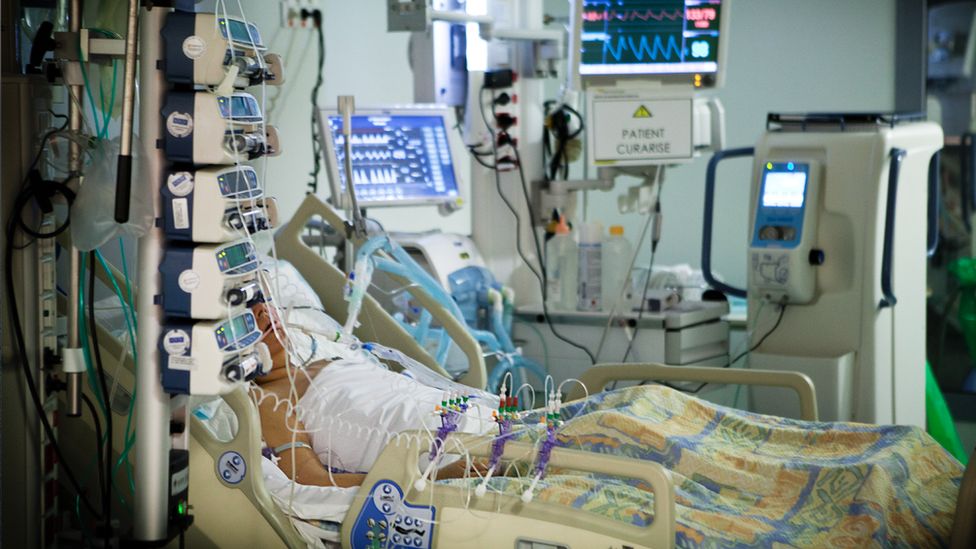
Dying, facing our deaths and those near us, is something we all must do. Some of the greatest philosophers have concurred that to live is to prepare for death.

Yet we live in a death-phobic culture which – largely due to the digital environment – is incredibly fast, distracting, bright and shiny and ‘full of life’. In relatively recent history people accepted death as a normal part of life, inevitably to be faced with sadness and mourning but never as a sudden shock as if some malignant miracle had occurred.

With so many of us in the rich countries living longer than ever, longevitiy for the majority bringing with it pain and suffering, dementia and deadly diseases, how do we prepare for death? Do we expect the incredible medical advances and technology to keep us going for ever? Is that our goal – to squeeze as many years and days out of life as we can? Has technology in this as many other other cases further removed use from nature and being a human rather than a machine?

In any case, what, if anything, can ‘digital health do to address the truth of our mortality? Lots of big questions here but as you and I will die we need to think of our own deaths. As a society, the birth rate is falling quickly at the same time as the older population is greatly increasing. Who will look after the old, who will pay for that care?

Perhaps we need to understand that technology has little part in our dying, apart from its role as a tool to alleviate pain and enable diagnoses. Certainly, there is a small number of enthusiastic scientists who believe that in this century that not only all disease but death itself will be defeated. We’ll look at these claims in later posts but for us here and now, dying is the truth of our lives.

With luck, and perhaps some forethought, we will have a ‘good death’, one that is peaceful and pain -free. The stark evidence, however, suggests that the majority, especially the poor, may face death unprepared, bewildered, frightened. Some – about 5% of the population – will receive palliative care; most will die in busy hospital wards or nursing homes.

To end on a bright note, here is Dr Kathryn Mannix who has 40 years experience as a consultant palliative care physician. She’s written a lovely book called With the End in Mind. There has been a growth in recent times of interest in death: academically it’s called thanatology. In most UK cities there are ‘death cafes’ where ordinary folk meet to talk about dying – not only people with a terminal diagnosis but anybody who believes that one day they will die.

We will all die as unique individuals, in different circumstances. Some will die suddenly but most of us will die more slowly (in fact, from the age approximately of 21 we are all in the process of dying). Digital technology can provide huge swathes of data about populations but the individual alone is a unique human being, and part of that unique being is unique dying. As laypeople we may be able to ease and support someone’s dying: most of us can’t. We are frightened and adrift in the face of death. Some of us will demand of doctors futile medical treatment. Doctors and nurses themselves, in addition to their expertise, don’t always have the time and, especially, the understanding to help the dying. At this important point of a person’s life what is needed most of all is kindness. Kindness is also the most important part of living, something we forget in the full flood of youth and health.

In the area of digital health we should never forget that it is but a series of technical tools, perhaps as sharp as a scalpel, that in no way is as essential as the human touch. ‘Health’ comes from the word ‘whole’ and our whole being is our unique full personhood with all the fears and joys, memories and loves, body and soul. We should always put people before data, and before people we should put the unique individual human person.

The Problem with “Problem Gamblers”

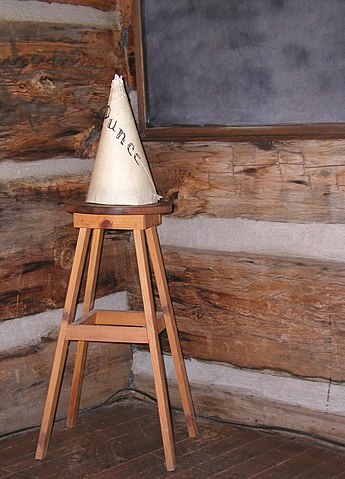
In the bad old days,  among the cruel behaviours of teachers was to make a child sit facing a corner and wear a hat with ‘Dunce’ written on it. If that didn’t make  them learn and behave properly, a child could expect a thrashing for their irresponsible waywardness.

More progressive education renamed ‘dunces’ as ‘problem children’.

Now, of course, in more enlightened times we speak of ‘problem schools’ as the main reason for between a quarter and a fifth of school leavers being functionally illiterate after eleven years of education. It has been a great leap forward for  society to recognise that the ‘problems’ may have something to do with the education system itself.

This month (July 2020) has seen the UK government launch a ‘war on obesity’. Proposals include advertising bans, stopping two for one incentives on junk foods, public health campaigns, taxes on industry, education, more help from primary health care and so on. There are critics of all this. They say that people should be able to eat whatever they want to, they are free to make their own choices and shouldn’t have that freedom removed by the nanny state. Parents, they say, have the right to feed their children whatever they like. The fact that unhealthy, fattening food is cheap should not stop poor responsible people making sensible meals with basic nutritious items such as turnips: if they can afford widescreen televisions and smartphones , they can afford to eat well. But such is the devastating impact on health and the economy, the state is now proposing to get tough, go beyond voluntary industry actions and the good sense of consumers.

After decades of denial the tobacco industry accepted that their product was both addictive and highly detrimental to health. Stringent government action has seen a huge fall in the number of people smoking.  A total ban on advertising and marketing, removal of branding on cigarette packs along with reference to tar and nicotine content which some took to allow for a choice of ‘safer smoking’, severe annual rises in duty, a ban on smoking in public places, and the hiding from sight of tobacco products in shops. Alongside this, smoking cessation programmes are free to everybody. Individuals remain free to use tobacco if they so wish.

These days, at the tobacco counter in a shop, the tobacco products are screened from sight. (It’s worth noting that alcohol is still freely on display, but that’s a different story for now). At the front of the counter, inches from the customer are advertisements for the National Lottery and a range of scratchcards priced from £1 to £5 each. Like sweets placed at a supermarket till they make impulse purchases more likely. They’re also an indicator of how normalised respectable gambling has become. A website called casinoplay.com warns the public that ‘it can actually be quite hard to win one of the top prizes.’ It advises that to increase your chances you should buy scratchcards in bulk.

The Myth of the ‘Responsible’ v ‘Problem Gambler’

Unlike smoking and obesity, the risks associated with gambling aren’t associated with physical health (except in the many tragic cases of suicide). Gambling risks include financial ruin, turning to crime, family and relationships breakdown, mental illness. Many sources of information refer to the incidence of gamblers running into such conditions is ‘only’ 0.5% of the adult population (the same way as ‘only’ 0.5% of the the population are schizophrenic). There are other figures for children and young people, and for adults ‘at risk’ of being in the 0.5%. Data is never simple. It isn’t always available. It’s a snapshot of a previous period in time. It requires interpretation – and these interpretations differ. But if the 0.5% figure is taken as it is, given the personal suffering indicated above, plus the damage to immediate others such as family, plus societal costs is not that alone reason to give gambling damage the same weighting as a serious mental disorder such as schizophrenia? And unlike schizophrenia which, although it can be managed and treated well, in many cases very difficult to treat and manage, are not problems associated with gambling more easily attenuated using the approaches we have seen with tobacco, and beginning with junk food?

Yet it’s sometimes implied that if there are only 300,000 or so people in deep trouble because of gambling, that’s all right. They didn’t stop when the fun stopped. No one made them spend much more than they could afford: they were irresponsible. It was down to their having that much-cherished freedom to chose, but making the wrong choices. Many millions more enjoy the fun of a flutter. The appeal to the ‘millions who safely (and responsibly) enjoy a flutter’ is something of an industry catchphrase, and it needs unpicking.

Having placed the ‘problem gamblers’ into a sort of pathological ghetto, the logic goes that everybody else is a ‘responsible gambler’, enjoying a harmless flutter. This isn’t so.

In all our lives fortune rises and falls, and this is more nearly literal in the case of the regular happy flutterer. A regular bettor or gambler will win some, lose some, and for the great majority, over time will lose more than they win. Winning £25 on a £5 scratchcard won’t compensate for the many weeks of getting into debt with rent or power or council tax after buying four such cards each week. The strain on marriages and families will increase as essential money leaks into slots or online gambling. The wage packet won’t be spent on days out with the kids or new school clothes. Things will be pawned, payday loans become essential as credit is refused elsewhere and credit cards are maxed out. Loans from friends and family go unpaid. There may be catastrophic times, perhaps a threat of eviction or repossession, survived only by a hair’s width and that survival with ongoing negative financial consequences. (Sometimes, such a catastrophe can be the impetus to stop gambling). Anxiety, depression, arguments may go with the territory. The danger of becoming one of the statistics in that ‘problem gambler’ ghetto may increase. As it is, there are many whose quality of life is negatively affected by gambling, and they don’t show up in the statistics.

Now obviously, this is painting a bleak picture. Not everybody who enjoys a doughnut or two will incur an obesity-related illness. Most people do spend money responsibly and can enjoy a harmless flutter. There is, of course, even for them a risk of going beyond the harmless flutter. Even somebody new to betting and gambling can (not will) spiral down to dangerous levels.

What’s needed is research into the ‘twilight zone’ of gambling-induced harms. This is an area which has to involve personal testimonies of experience over time. It’s especially important in relation to young people who have been nurtured in a normalised gambling environment. It may lead to a more nuanced understanding of the scale and nature of gambling harms than that offered by dominant narratives of ‘problem gamblers’ versus the rest of us.


‘Personal Responsibility’ and Addiction

One of the hottest topics relating to addiction is the concept of personal responsibility. Do addicts bring it on themselves? Are addicts morally weak? Do addicts repeatedly fail in recovery because they refuse to take on responsibility?

On the other hand, it can be rightly claimed that all this emphasis on the individual is distorting an understanding of addiction. If, as some claim, addiction is a ‘disease’ how can people be responsible for it? Why is there virtually no alcohol addiction in Saudi Arabia (where alcohol is prohibited by law)? What social factors play a part in addiction? Do some commercial products – tobacco is an example – ‘hook’ some people in the right circumstances?

There is no such thing as an addict; there are only individuals suffering with addiction. Everybody is different, but some groups seem more prone to addiction to others. In the professions journalists, the police, doctors, entertainers, sportspeople and politicians have high rates of addiction. So too do people with multiple and complex disadvantages such as homelessness, poverty, lack of educational and cultural capital, mental illness, criminal background, adverse childhood experiences, trauma – or just one of these.

And people from different social backgrounds seem to be treated very differently when their addictions come to light. Newspaper readers will weep over the death of a pop idol through drugs; a politician will be praised for his ‘brave struggle’ against alcohol. In popular culture – films, books and television – we have come to expect our flawed heroes often to have an addiction problem as one of their flaws, a lonewolf cop bucking the rules and knocking back malt whisky while meditating on a case, a singer in rehab, a public figure making public penance.

Less favourably are seen the ‘scagheads’, the ‘junkies’,  the street addicts, the working class addicts. Although victims all their lives of unequal and unjust social conditions, turning to drugs or drink or gambling to escape if only for a moment, it is they who are most harshly blamed and despised for their lack of responsibility – while those with a lifetime of advantages are treated with adulation and sympathy.

In his remarkable book, Good Cop Bad War, former undercover cop Neil Woods charts his journey of increasing knowledge through the ‘low life’ of desperate addicts (in contrast to the venomous gangster business cartels that bring drugs to market). He grow increasingly sympathetic to the friends he makes while pretending to be himself an addict. Apart from their addiction, most are essentially decent, often intelligent, kind and caring. One such friend , Cammy, tells him his heart-felt news that he has heard a good friend has died. Neil asks whether he will go to the funeral to say goodbye and Cammy replies, ‘I’m not going to the funeral. I wouldn’t do that to the family. The last thing they want is some dirty junkie turning up and ruining everything.’ As Woods observes, ‘No matter how society may condemn and look down on the addict, it is never, ever as low a view as he has of himself.’

That internalisation of social attitudes and stigma is something all addicts have to deal with. Part of them remains ‘clean’ and is a constant accusing voice; the addict hates themself. Guilt and shame alone can maintain an addiction – that belief of such utter worthlessness that there is no point in trying to stop, instead seeking that absurd temporary negation of inner torment with a fix.

Of course, those with a lot going for them tend to do better. Not everybody, of course: the nature of every individual addiction, while having common attributes, is unique in the complexities of an individual. It’s probably easier on the whole if you’re, say, a teacher to have three months leave on full pay to attend rehab, or just to get your life together, than if you are without any money, any support, any care, any love, surviving in brutal conditions. Though yes, many who seem to have well insulated lives with all the support in place do succumb, grow sick and die. And yes, too, some at the very bottom recover and flourish.

There are as many as 40% of addicts who recover spontaneously, relatively painlessly, without any intervention by ‘experts’ or support organisations. A well known example of this is ‘maturing out’ whereby young people who have addictive or risky tendencies literally grow out of them when they settle into employment, get married, start a family. Another famous example is how 80% of American soldiers deemed heroin addicted in Vietnam lost their addiction when they returned to the States and their families. Against this, many others in recovery are certain that addiction is a disease for life and that the only way to manage it is by faithfully following a programme such as a 12-steps one.

A word is needed here too about dependence versus addiction. Through force of habit, culture, lifestyle, many drinkers, for instance consume not only health-damaging amounts but quantities which make them physically dependent. The withdrawal from physical dependency can be life- threatening and ideally requires medical supervision. Yet many heavy drinkers then go onto just stop or greatly limit consumption: they were heavy drinkers, not alcohol addicts. There is an additional dependence which is separate from addiction – psychological dependence. Partly this is just the force of habit, neural correlates in the brain ‘speaking’ loudly to perform an action when certain triggers arise. Usually one can become psychologically dependent on a substance or activity to avoid stress, negative feelings or often an undiagnosed mental disorder such as anxiety and depression. Dependence can, and often does, lead to addiction but it’s still possible to recognise a dependence and take responsibility for halting it with acceptance of necessary effort and suffering which will vary greatly in terms of time and intensity according to unique individuals in unique circumstances.

Addiction by its very nature, the heart of addiction, disowns the individual’s core self. It disowns the possibility of being responsible for one’s destiny, for making deep choices. No addict will be able to understand what is going on. They are fully aware of the misery they leave in their wake, of their loss of pride, reputation, money, health, relationships, status, children. They desperately want to stop. But they can’t. In the old days people spoke of a demon inside that controlled them. The demon took them over. This degree of inner torment varies from individual to individual. It’s certainly true that there are many ‘highly functioning addicts’ in all walks of life, folk nobody begins to suspect as being an addict, and, of, course, another core attribute of addiction is the addict’s propensity to deny their addiction. It’s for this reason that common wisdom has it that people must ‘hit rock bottom’ before they can start to recover. This is, fortunately, a myth. It may be true that a secret gambler’s addiction only comes to light when the bailiffs arrive to take the family home and he or she spirals into heavy debt, bankruptcy, prison or failed suicide attempts. But in many cases – often in consort with worried others – many are lucky enough to address their addiction before absolute calamity.

The foregoing suggests just a few of the strands in the complexity of an individual’s addiction. If there is a common attribute of addiction it is that to take responsibility for recovery one must already have made a vital move. This vital move, this perception that one is not only the addicted self, is the precursor of recovery. For some, this vital move is totally unconscious and involves little pain and effort, for others it is a lifelong process.

To conclude, to return to the topic of addiction and responsibility. All of us are a product of our environments, probably more so than products of our genes. Children have been sold drugs from icecream vans (dealers do not ask for age verification or advise responsible use of their products) so 12= year-olds have become heroin addicts. The vans are part of the environment, behind the vans are networks of the drugs business, also part of the environment. People continue to smoke cigarettes but on the packets is written ‘smoking kills’, and tobacco is more and more restricted by government policies: it’s recognised that tobacco addiction is not the result of weak responsibility in individuals. Campaigns to restrict and limit junk food (itself addictive), sugar, salt, fat are not controversial. People argue about minimum pricing for alcohol, but the argument is not seen as being around any bizarre claims. In short, government and industry are seen as having a major role in addressing the damage that harmful products may do to individuals and society, including addictive products.

Current debate about addiction is skewed towards a focus on individual responsibility. Just as a parent is deemed responsisible for feeding their children high doses of sugar and fat (These being by far the cheapest foods to buy for those in poverty), so the addict is held reponsible for choosing their addiction (even if this was motivated by a need to escape misery and despair into 20 minutes of arificial paradise). There are no jackpots, magic fixes that will ever beat the scourge of addiction but government and industry have to stop denying their role in attenuating it.

 

Social Media Addiction = Gambling Addiction

The Guardian published an extract from Richard Seymour’s book, The Twittering Machine. It’s well worth a read.

It makes the claim that no only are social media addictive, but why they are. The machines most of us use every day – phones, tablets, laptops – hook us with bait, Seymour writes, in just the same way that gambling online does.

Here’s the start:

We are swimming in writing. Our lives have become, in the words of the author and academic Shoshana Zuboff, an “electronic text”. Social media platforms have created a machine for us to write to. The bait is that we are interacting with other people: our friends, colleagues, celebrities, politicians, royals, terrorists, porn actors – anyone we like. We are not interacting with them, however, but with the machine. We write to it, and it passes on the message for us after keeping a record of the data.

The machine benefits from the “network effect”: the more people write to it, the more benefits it can offer, until it becomes a disadvantage not to be part of it. Part of what? The world’s first ever public, live, collective, open-ended writing project. A virtual laboratory. An addiction machine, which deploys crude techniques of manipulation redolent of the Skinner Box created by behaviourist BF Skinner to control the behaviour of pigeons and rats with rewards and punishments. We are users, much as cocaine addicts are users.

What is the incentive to engage in writing like this for hours each day? In a form of mass casualisation, writers no longer expect to be paid or given employment contracts. What do the platforms offer us, in lieu of a wage? What gets us hooked?

Read the rest of the article to see what gets us hooked.

Grand National Pandemic

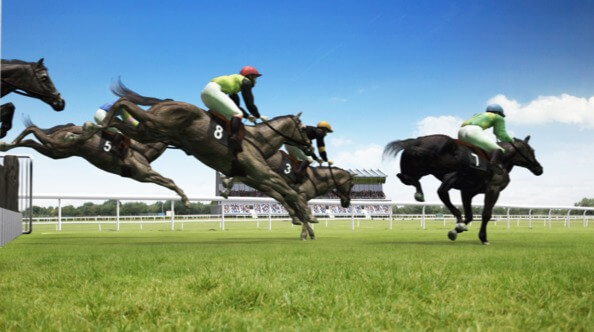
The Grand National this year will be ‘virtual’ but promises to give all the excitement of the real thing. The development of this impressive digital machine has seen trials during the previous three years and shown a fairly accurate correspondence with the actual race results.

Essentially, it is driven by random number generators which ‘weight’ different outcomes via complex algorithms taking in form, probable weather conditions and so on. Perhaps less exciting is that the virtual race has already been run and recorded for television as ‘live’, the results guarded, it is said, by only 20 people sworn to secrecy.

For bettors who frequent betting shops, virtual racing is nothing new. It’s been up on the wall for many years now, quite a change from the old days when bookies were not allowed even to have television screens. For most viewers it will be a novelty with all the family fun of the real thing. Excited kids, snacks, often more than a little booze. What a good way to fill the time in these days of isolation.

We All Love Our NHS and Carers

We’ve recently enjoyed an outpouring of appreciation for NHS staff, carers and all the lowly paid workers at the front line of maintaining essential services. Very sincere, heart-warming, freely given and costing nothing. Like the Grand National, a celebration of what it is to be British.

Of course, there will always be those cynics who claim that among the people being applauded were many facing deportation post-Brexit. There will always be that miserable minority of lefties and liberals who’ve been going on for years about how the NHS and other public services are grossly underfunded, or how badly some are paid while others grow rich.

How wonderful, therefore. it is to see the whole nation pulling together despite such gloomy naysayers.

The Benevolence of the Gambling Industry

All betting profits from the virtual Grand National will be given to NHS Charities Together  (which collectively provides £1 million a day to help the nation’s health and ameliorate underfunding of the NHS). The British Betting and Gaming council, a recent amalgamation of the Association of British Bookmakers and the Remote Gambling Association is focused upon lobbying politicians and recovering from the industry’s negative image of recent years. It is promoting the industry as contributing to the nation’s needs in the time of coronavirus.

BGC Chief Executive Michael Dugher has said: “With the UK understandably and rightly in lockdown, unfortunately the Grand National can’t take place; however the virtual Grand National will be the closest we can get to creating one of those moments when we can all come together in celebration, not just for the world’s greatest sporting event, but for the NHS heroes working on the front line to keep us all safe.”

As part of the ‘deal’, all bets are limited to £10 or £10 each-way. Betting companies will not advertise their services for this event except to existing customers. There will be no competition between different companies but all will offer the same odds. There will be no special offers, free bets or similar enticements associated with this event.

Virtual Images and Reality

Corporate philanthropy has always been an essential contribution to brand value. Some companies do sincerely and practically operate with a core value of social responsibility. At the other extreme, charitable donations, grants and social partnerships are seen as marketing tools. A company’s image can severely impact on profits. Negative image can bring about  political pressures such as through tighter regulation and taxation. Advertising and marketing are essentially about image – how important players, including consumers feel attracted or repelled. Image manipulation is a vital function in company development.

It is for the reader to consider what the present case of the betting industries’ generosity amounts to. Though we should add, of course, that with an already negative corporate reputation which holds in some quarters, clearly for betting to continue as normal at a time when national crises are bringing out sacrifice, fortitude and risks in so many would be a public relations disaster.

The idea of watching a cartoon race that has already been run as if it were a real horse race in live time, neatly reflects the differences between corporate image and corporate reality.

New to Gambling?

People who’ve always enjoyed their once-yearly bet on the National will, if they have access, go online and register with a company. For some this will be a gateway to a new experience. Soon after the National people may return to gambling sites, perhaps enticed by the advertisements which will inevitably come their way. Then the offers will entice further – the free spins, the free bets, the multitude of new games to spend money upon.

Children watching cartoon racing for the first time will undoubtedly love it, becoming one of the adults’ pleasure and excitement. A virtual horse race is so similar to a computer game, great fun. Like loot boxes. Products aimed at children which are not classified as gambling have been repeatedly shown by research to often lead to gambling behaviour and addiction.

Locked in and bored, with a few weeks yet to go before a ban on using credit cards for gambling, there is a likelihood that a number of people will run into great financial trouble.

A letter today – to Nigel Huddleston, the UK minister responsible for gambling, and to the BGC – signed by 22 MPs, two Lords and one of the UK’s foremost gambling addiction experts said, “People are at home and are severely restricted, with access to mini-casinos on their laptops or mobile phones.” They called for urgent tight restrictions upon advertising, reduction of stakes on ‘highly dangerous’ slot-like games, ending the VIP scheme which rewards heavy losers with enticements, a mandatory maximum for deposits. They also ‘called on companies to release internal data to independent researchers to help them assess the scale of harm caused by gambling during the coronavirus outbreak compared with normal circumstances.’


That’s in stark contrast to what some would see as the British Betting and Gambling Association’s self-promoting generosity on behalf of the heroic NHS workers.